Beyond Specifications: What Else Drives Slewing Bearing Stability?

In technical catalogs, a slewing bearing is defined by loads and specifications. On the job site, however, it is the machine's critical, irreplaceable pivot. Replacing a failed bearing requires complex teardown, causing costly downtime that far exceeds the part's price. Following factory greasing schedules and matching bearings to real-world operating environments—like dust, salt spray, or precision vibration—is key to preventing early failure and maximizing equipment uptime.
When you search for "slewing bearing," most articles talk about axial loads, radial loads, overturning moments, and structures—single-row, double-row, three-row rollers, or internal, external, and ungeared types. These are the parameters engineers use during design. But for equipment operators , the real value of a slewing bearing is much simpler: Will the machine show up to work on time? Will it suddenly freeze? And how long does a replacement take?
This article skips complex parameter calculations. Instead, it looks at slewing bearings from the user's perspective: What happens when one fails, how to maintain it, and what else matters beyond spec sheets during selection.
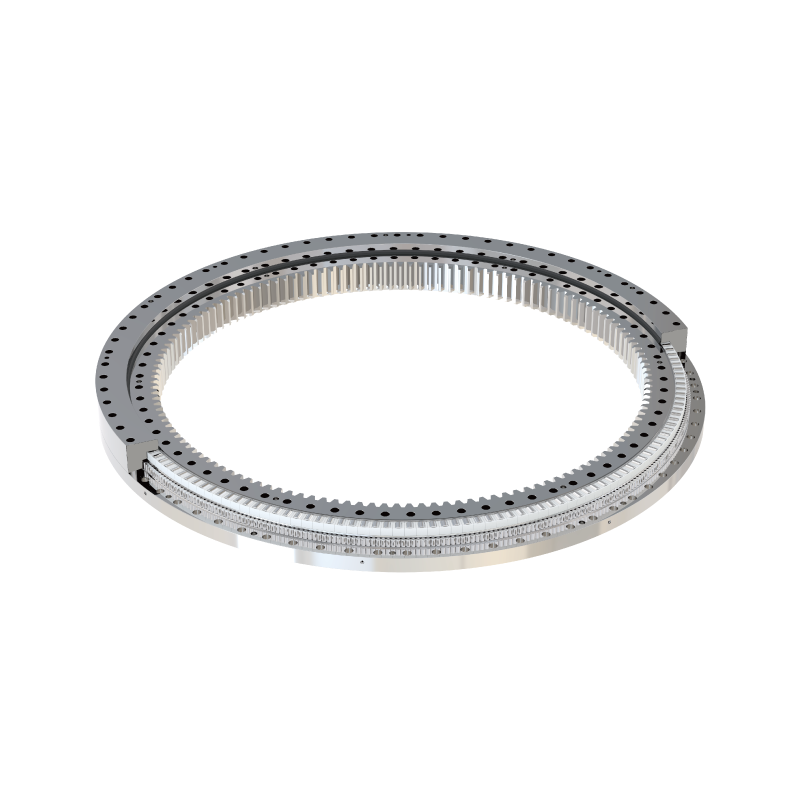
1. Not Just a Part: A Critical Structural Pivot
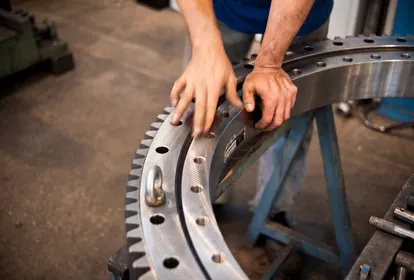
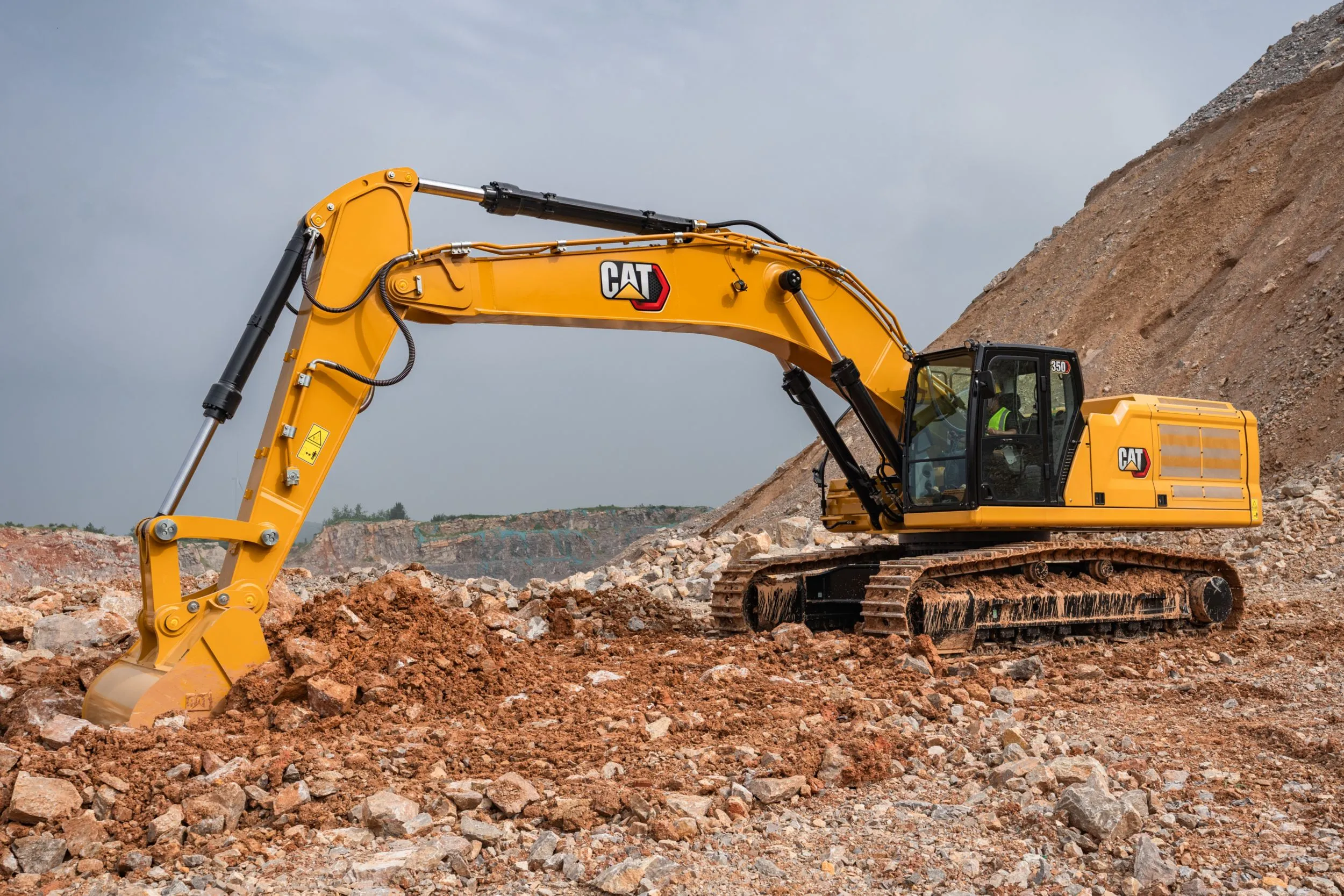
A slewing bearing connects the stationary base to the rotating upper structure. It is a critical structural pivot. You find it between the undercarriage and upper body of an excavator, between the tower and slewing platform of a crane, as well as in port machinery, tunnel boring machines, CT scanners, radar antennas, and revolving restaurant platforms.
This joint has one key feature: there is usually only one per machine.
If many other parts on a machine fail, you can use a backup or adjust how you work for a while. But if a slewing bearing fails, you don't just lose a secondary feature—the machine completely loses its ability to rotate.
Replacing it is also difficult. It sits right at the junction of two main structures. In a standard repair process, workers must lift the entire upper structure off, remove dozens of high-strength bolts, remove the old bearing, position the new one, align it precisely, torque the bolts in the correct sequence, and then apply grease and run a test. Field reports show that replacing a slewing bearing on a mid-sized excavator usually takes several days of downtime. For larger machines, or if field rigging and bolt conditions are poor, it takes even longer.
Therefore, when operators evaluate a slewing bearing, the first question is rarely "How much load can it carry?" Instead, they ask: How durable is it? If it fails, how long is the machine down, and how much will the repair cost?
2. Grease Costs a Few Dollars; Failure Can Cost Tens of Thousands
Many people have a common mindset about slewing bearing maintenance: they know they should add grease, but they feel delaying it by a few days won't hurt.
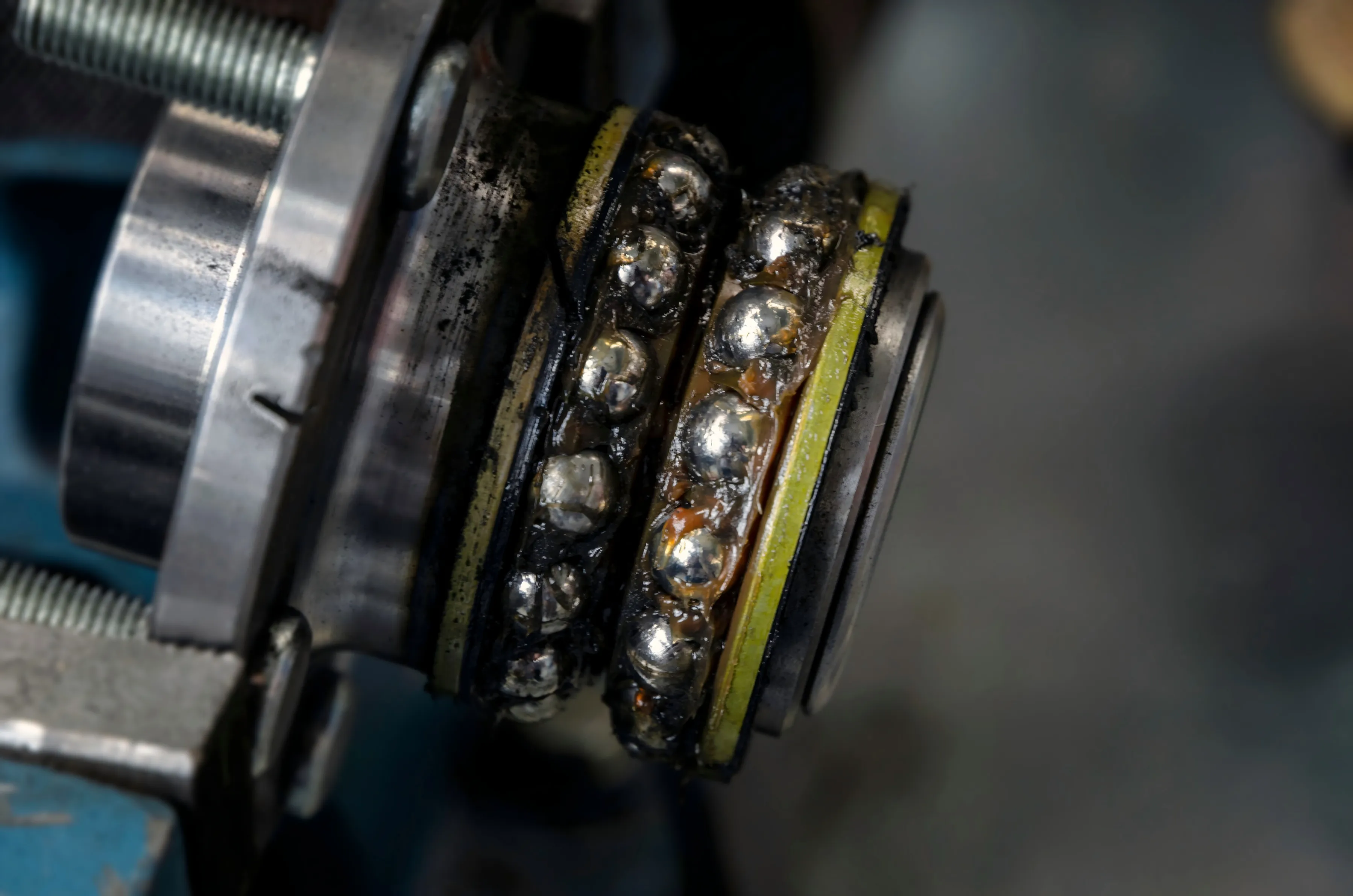
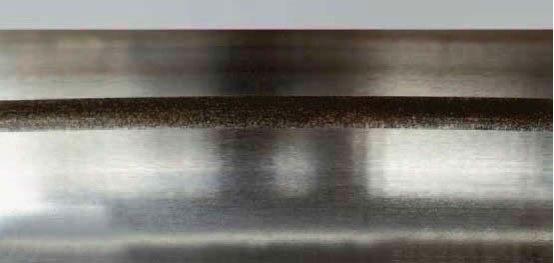
However, the cost gap is huge. The material cost of a single greasing is usually just a few dollars to a dozen dollars. But if you skip greasing over a long period, the raceway and rolling elements run dry. Metal touches metal directly, accelerating wear and spalling. Once spalling occurs on the raceway surface, adding grease cannot fix it—the bearing must be replaced. On a mid-sized machine, the total estimated loss (including parts, labor, and downtime) often ranges from $15,000 to $25,000. For larger machines or mining equipment, it is even higher.
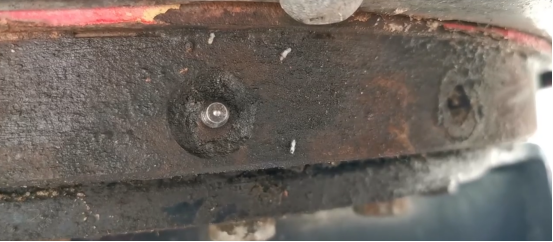
Why is lubrication maintenance so critical for slewing bearings?
A slewing bearing carries axial load, radial load, and overturning moment all at once, resulting in high contact stress. It also turns at very low speeds, making it hard to form a full fluid oil film. As a result, it relies heavily on grease and its extreme-pressure (EP) additives. If jobsite dust, ocean salt spray, or mine slurry gets past the seal, it acts like an abrasive inside the bearing. When an excavator bucket slams into the ground or a crane lifts a heavy load suddenly, impact forces multiply the load instantly. Under these conditions, grease is not an optional extra—it is the basic requirement to protect the raceway contact surfaces.
| Equipment Type | Typical Maintenance Interval (Per Owner's Manual) | Primary Focus |
| Excavators / Loaders | Grease raceways every 50–100 operating hours. Check bolt pre-torque after the first ~100 hours, then re-check every ~500 hours. | High impacts and heavy dust. Never skip greasing. Stop the machine immediately if you hear unusual noise or feel jerking. |
| Cranes / Tower Cranes | Grease raceways roughly every 100 operating hours. Regularly inspect seals, gear mesh clearance, and bolt pre-torque. | High safety requirements. Evaluate axial clearance or rotation noise per standards; replace if limits are exceeded. |
| Port & Marine Machinery | Shorten greasing intervals based on harsh conditions. Regularly check seal integrity and corrosion. | Salt spray corrosion is the main risk. Sealing and corrosion protection are just as important as load capacity. |
3. Selection Is Not About "Sufficient Specs"—It’s About Operating Conditions
Finding a model with "sufficient load capacity" on a spec sheet is only the first step. What actually determines whether a bearing reaches its expected service life comes from analyzing its actual operating conditions:
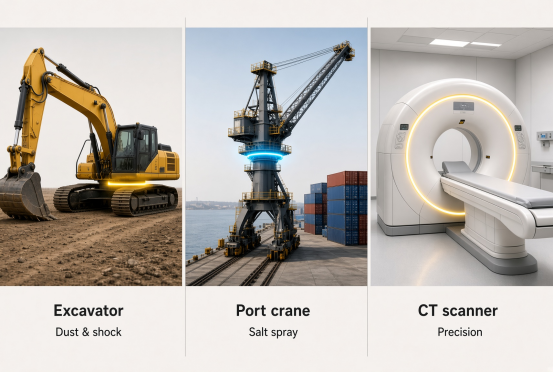
Is it a dry workshop or a dusty mine? An inland jobsite or a salty coastal port? Smooth rotation or frequent impact? Environmental factors dictate seal design, surface anti-corrosion treatment, and lubrication intervals—often mattering more than simply "buying one size larger in load rating."
Excavators
Excavators generate significant amounts of dust, experience high impact loads, and involve frequent steering operations; therefore, the operator is most concerned about the machine's availability rate. The bearings must be impact-resistant, wear-resistant, and well-sealed to operate effectively in dusty environments over an extended period. Selecting lightweight bearings with average sealing performance based solely on whether the "rated load is sufficient" may lead to premature wear due to dust ingress – ultimately resulting in higher costs.
Port and Marine Machinery
Salt spray enters through weak seal points, corroding the raceway and rolling elements, causing pitting and spalling. Material selection, surface treatment, and seal structure must be evaluated alongside load capacity. A configuration that lasts a long time on an inland site may have a significantly shorter lifespan near the sea.
Medical Equipment (e.g., CT Scanners)
The main requirement for a CT gantry bearing is usually not "how much weight it holds," but "how smoothly it turns." The gantry rotates at high speeds with very low vibration; even tiny movements can affect image quality. Precision grade, friction consistency, and vibration control are the key value drivers here.
Practical Advice: Before purchasing, write down your operating conditions—environment, load characteristics, operating frequency, expected service life, and replacement difficulty. Hand this information to an experienced bearing supplier for condition-matching, rather than ordering purely based on dimensions or model numbers.
4. Conclusion
Industrial equipment relies on uptime and reliability. For slewing bearings, regular lubrication is the most cost-effective way to prevent early failure. Matching the bearing to actual operating conditions—environment, loads, and expected lifespan—is the key to avoiding unplanned downtime losses.
Understanding actual operating conditions and following the specified lubrication schedule is what keeps heavy equipment running reliably.

THB Bearing
Professor
Infomation
Tags
Published
Author
Share
Contents
Subscribe to THB Blog
Stay connected with THB
and receive new Blog posts in your inbox