The THB TRK Wheel Block & TRE Wheelset: One System for Travel Mechanisms

The THB integrated wheel block TRK and wheelset TRE are built as one system for travel mechanisms: a wheel block for standard duty, open to custom development, and a wheelset for heavy loads. In numbers, the system covers standard duty from 2.7 t to 40 t on the TRK wheel block and heavy loads from 5 t to 60 t on the TRE wheelset. This article sets out what the system is designed against and how it is built — the operating conditions it serves, the problems it addresses, the structural and mounting decisions, and the wheel materials available.
1. Two product lines, one system: the TRK wheel block and the TRE wheelset
The TRK wheel block is built for standard duty and is open to custom development. The TRE wheelset is the choice for heavy loads — dependable by design.
Sizes run across both lines: the TRK wheel block comes as TRK 112–200 with a load capacity of 2.7 to 10 t, and TRK 250–500 with a load capacity of 16 to 40 t. The TRE wheelset comes in five wheel diameters — 250 mm, 315 mm, 400 mm, 500 mm and 630 mm — with load capacities from 5 t to 60 t. Special versions and non-standard custom versions are available on request.
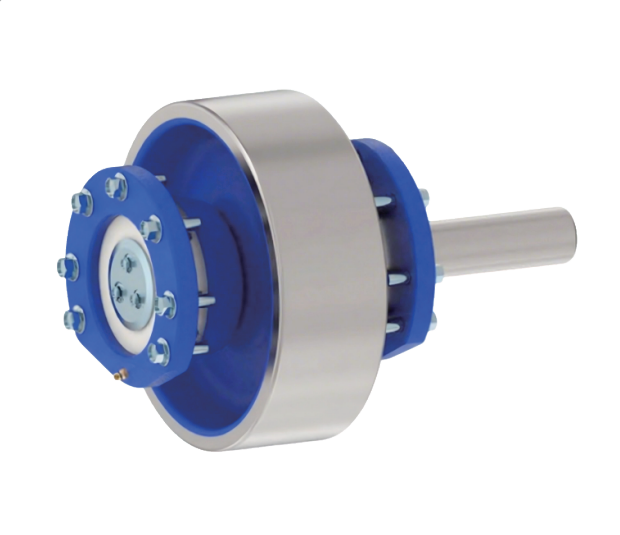
The TRE wheelset — five wheel diameters from 250 mm to 630 mm, load capacities from 5 t to 60 t.
The two lines are engineered differently, and are covered that way below: the TRK wheel block carries the structural, mounting, material and accessory choices, while the TRE wheelset is defined by its mounting principle and the replacement that mounting makes possible.
2. Operating conditions: loads up to 60 t, frequent start-stops and reciprocating acceleration
The system is designed for loads of up to 60 t, covering manufacturing applications from material transport, merging and transfer to distribution and assembly — for both indoor and outdoor use.
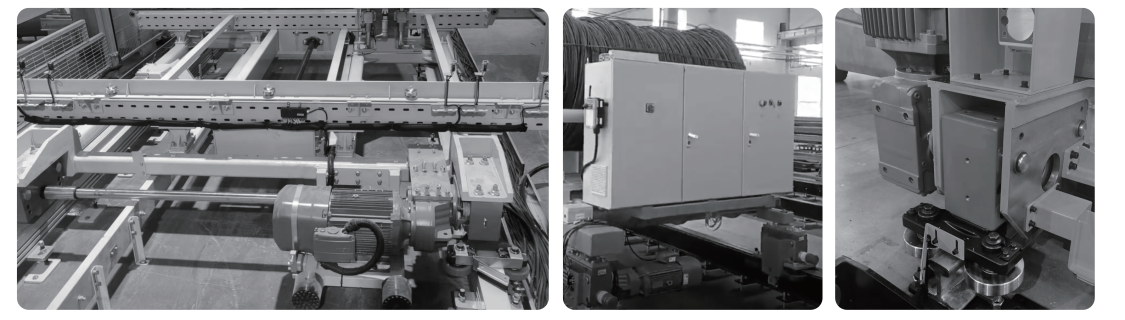
Manufacturing applications from material transport, merging and transfer to distribution and assembly — indoors and outdoors.
Within those applications, the demands on a wheel unit are consistent: heavy loads, frequent start-stop cycles, and constant reciprocating acceleration and deceleration. These are the conditions the TRK and TRE are designed around.
3. Common problems wheel units face in these applications
The common problems in these applications — the ones this system is designed against:
- Hard to replace.
- Wheels wear out quickly.
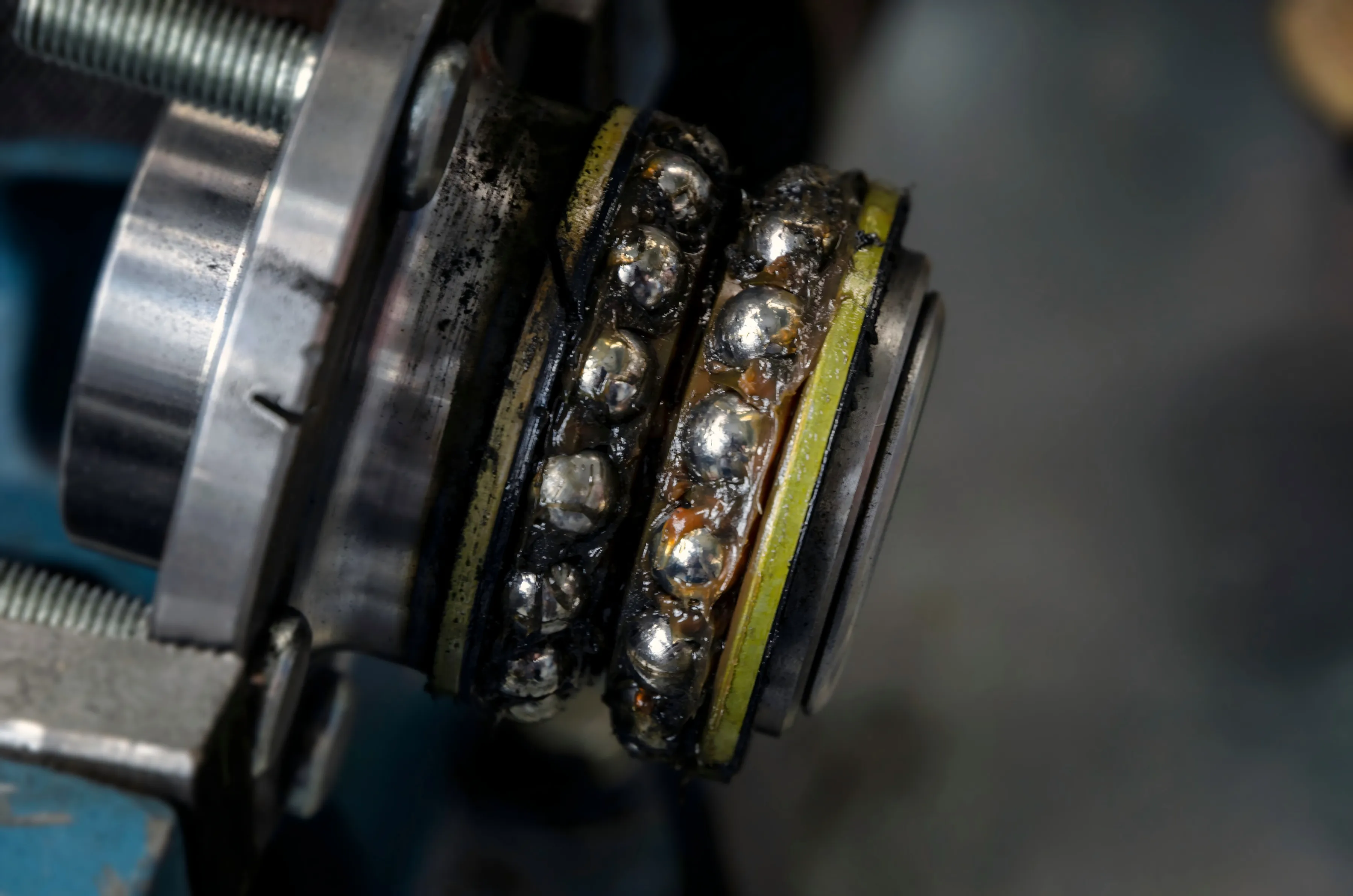
- Fractured grease and premature bearing failure.
- Poor design leading to loose, clearance fits and rapid wheel set wear.
Each of these points to the same place: the structure of the unit and the way it is fitted into the machine. That is where the design decisions below begin.
4. An integrated structure built for replacement — the TRK wheel block
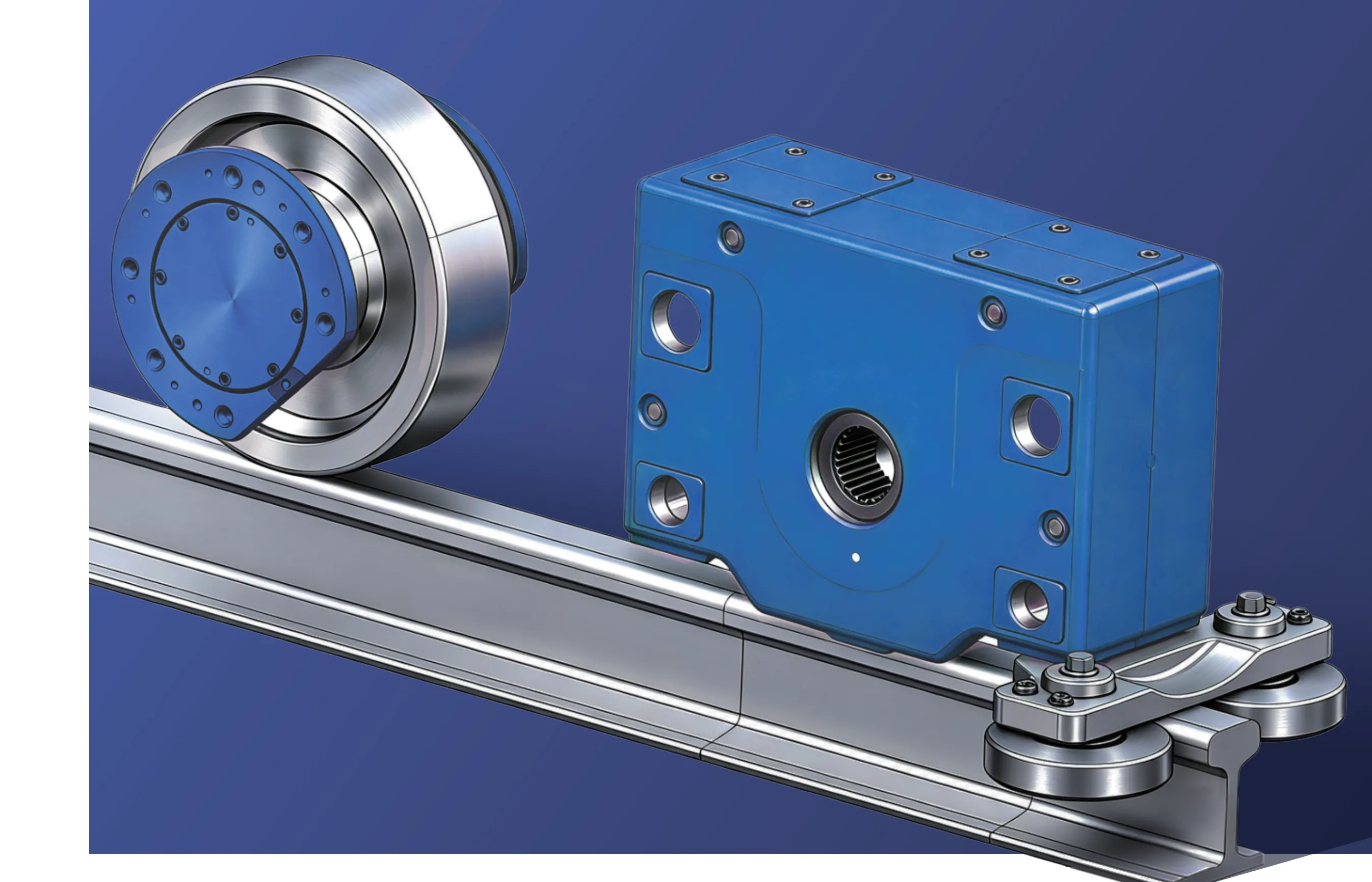
The TRK wheel block uses an integrated, compact internal design combined with a modular external unit design. The result is simple installation and alignment — and, when the time comes, easy installation and replacement with fewer man-hours on maintenance.
This is the answer to the first problem on that list: a unit that is hard to replace.
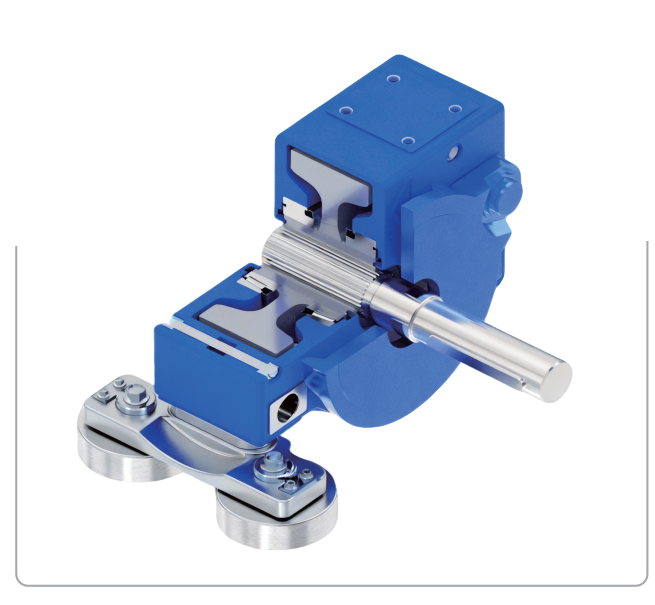
The TRK wheel block — an integrated, compact internal design combined with a modular external unit.
5. Mounting options: top, end-face, pin, base and corner mounting
On the TRK wheel block
Mounting surfaces provided at the design stage open up a wide range of connection options: top mounting with bolts or welded flanges, end-face mounting, and pin mounting where the unit is installed in hollow sections and cross beams.
Pin mounting carries two practical consequences. It allows installation without additional support structure — and it is the structure recommended for stacker applications. The unit can also be installed, pre-fitted and aligned even after installation is complete.
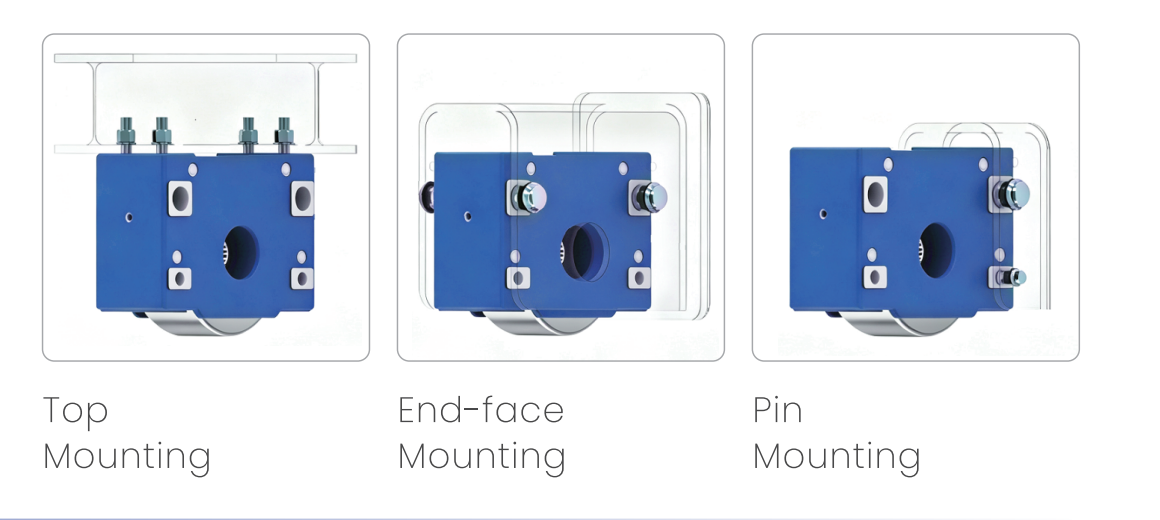
TRK mounting options: top mounting, end-face mounting and pin mounting.
On the TRE wheelset
On the TRE wheelset, mounting is the design principle. The wheelset can be base mounted or corner mounted, so it fits directly onto travel mechanism frames without laborious alignment work. A new wheelset can then be swapped in quickly, without alignment work, so equipment reliability stays intact.

TRE mounting types: box beam mounting (1) and angle mounting (2).
6. Wheel materials for the TRK wheel block: ductile iron, 42CrMo and NDI
Wheel materials are specified for the TRK wheel block. A wide range of wheel materials covers many applications: the material is selected to match the actual duty condition. 42CrMo and ductile iron are both metallic materials, and both meet the load requirements of wheel system design. Their properties differ as follows:
| Property | Ductile iron | 42CrMo | Remarks |
| Tensile strength | Very high | High | Either material meets the load requirements of wheel system design |
| Yield strength | Extremely high | High | – |
| Elongation (toughness) | Moderate | High | 42CrMo is more impact-resistant |
| Hardness | High | Moderate | – |
| Fatigue strength | Extremely high | High | Ductile iron offers outstanding fatigue resistance — it strongly resists pitting and spalling caused by contact fatigue and significantly extends wheel body life |
| Wear resistance | Excellent | Good | Ductile iron is harder; under load its surface work-hardens further, adding wear resistance and reducing rail wear |
| Damping | Very good | Fair | Ductile iron helps absorb micro-vibrations in operation, protecting the wheel box and drive system and reducing running noise |
Beyond metals, the TRK wheel block offers a polymer option. The NDI wheel — a polyurethane grade — offers smooth and quiet operation and protects the rail; it runs steadily even under hard acceleration and braking, making it a valuable complement to conventional metal wheels, and it plays a higher role in the new energy industry.
7. Accessories and custom versions for the TRK wheel block
The TRK wheel block is supported by an accessory range that extends beyond the unit itself: track guide rollers, buffers, mounting pins, rail brushes, motor brackets, drive shafts, spline couplings, washers and circlips, and positioning adjustment bolts.
Together with the custom development the TRK line is open to — non-standard custom versions and solutions available on request — the accessory range lets the whole travel unit be specified from one source.
The system, in short
The system is built around a defined set of operating conditions: heavy loads, frequent start-stops and reciprocating acceleration. The TRK wheel block answers them structurally — an integrated design built for replacement, and mounting options that open up at the design stage, with pin mounting for stacker applications — and in material: ductile iron, 42CrMo, or the NDI polymer wheel. The TRE wheelset answers them at the mounting: base or corner mounted, and swapped without alignment work.
Download the TRK / TRE Wheel Block Leaflet
he complete series overview — sizes, mounting options, wheel materials and accessories, all in one PDF.

THB Bearing
Professor
Infomation
Tags
Published
Author
Share
Contents
Subscribe to THB Blog
Stay connected with THB
and receive new Blog posts in your inbox